
Shared WhatsApp Number for Business: One Number, the Whole Team
Most businesses start with one WhatsApp number on one phone. It works until a second person needs to answer. The fix is not a second number or a passed-around phone, it is one shared number that the whole team works from, where every conversation has a named owner and nothing slips through. This page shows what that setup looks like and how to run it without chaos.
Last updated June 5, 2026
Product Proof
What This Looks Like In The Product
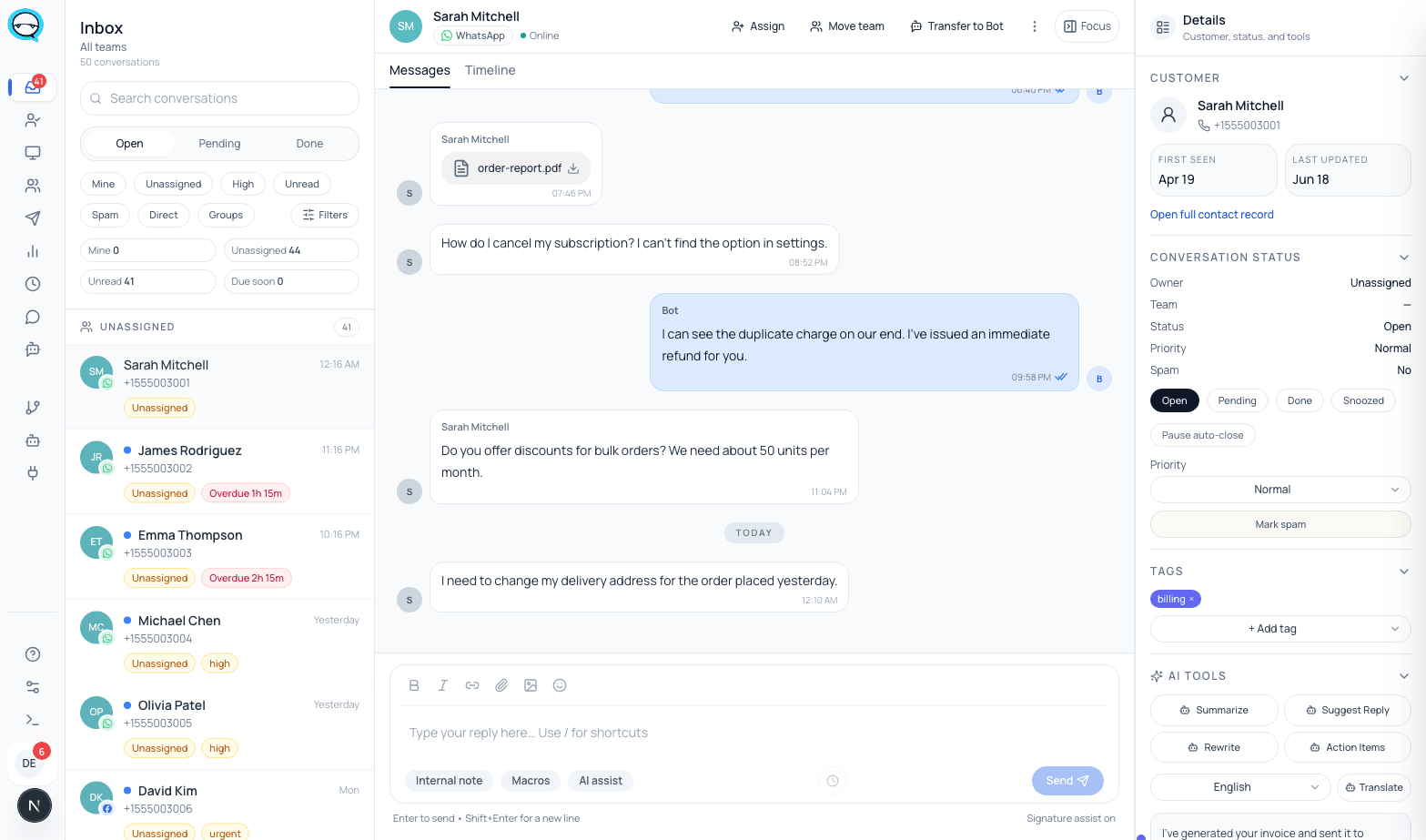
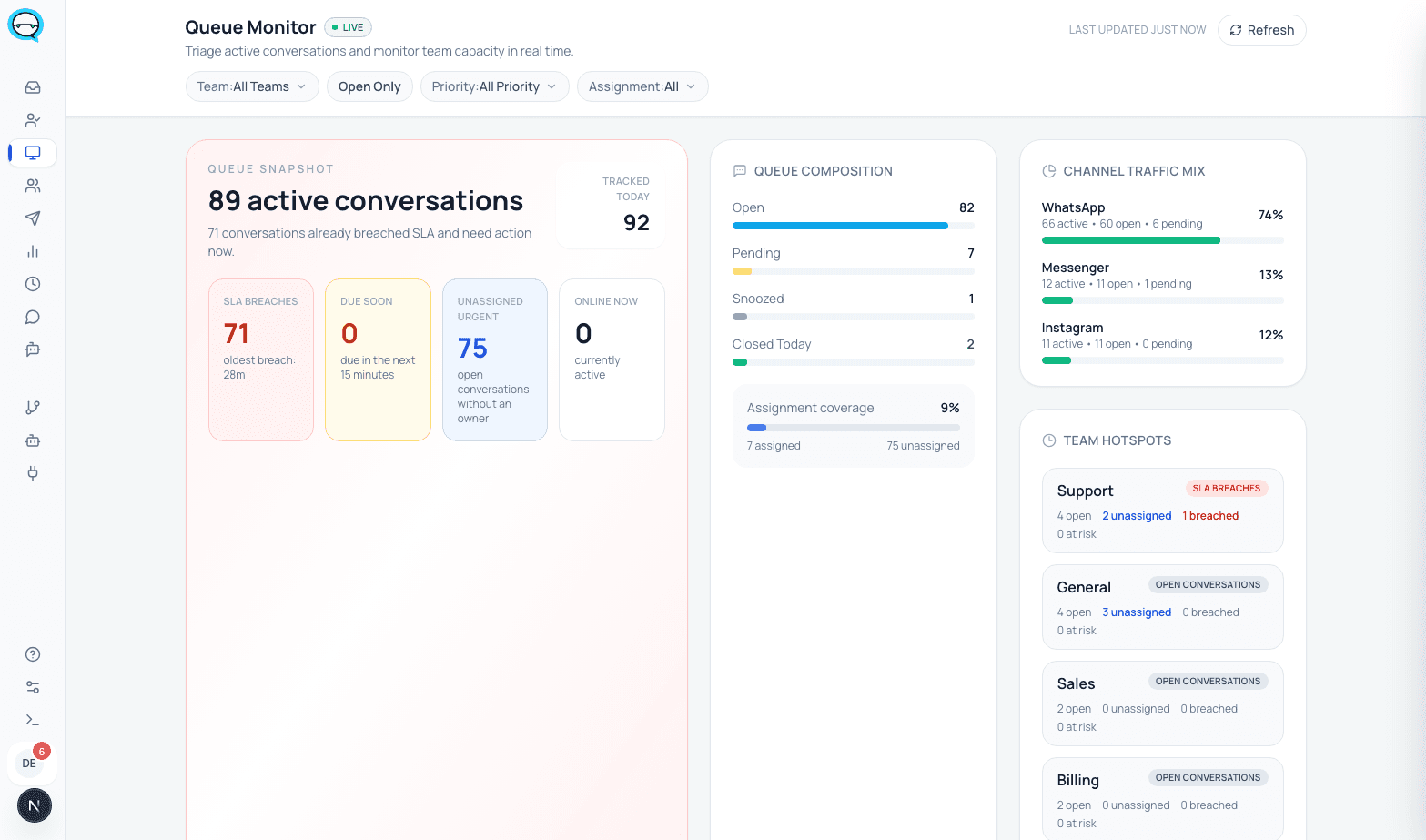
Real screenshots from the live marv.Inbox workspace. marv.Inbox is also available in Hebrew and Arabic.
Why teams search for this
Why one shared number breaks without structure
Sharing a number is easy. Sharing it well is the hard part. The moment two people answer the same chats, ownership and follow-up start to slip.
- ▲Two people reply to the same customer without knowing about each other.
- ▲Follow-up lives in one person's head or phone, so it gets forgotten.
- ▲Managers cannot see who is handling what, or what is overdue.
Workflow
How to run one number across a team
Bring the number into a shared inbox instead of a single phone, so every chat lands in one queue.
Give each conversation an owner with statuses and notes, so the team always knows who is handling it.
Add follow-up reminders and a queue view so overdue or unassigned chats surface before the customer complains.
What the better setup should include
What a good shared-number setup gives you
Clear ownership
Every incoming chat gets an owner, so there are no conversations that belong to everyone and therefore no one.
Shared context
Anyone who opens a conversation sees the full history and notes, instead of asking the team who spoke to this customer.
Team oversight
Leads and admins see queue load, response times, and stalled chats instead of guessing what is happening on the number.
Best fit
Who needs a shared WhatsApp number
- Businesses where sales, support, or operations all run through one WhatsApp number.
- Teams that have outgrown a single phone but do not want a confusing pile of numbers.
- Managers who want to add people to the number without losing control of who owns what.
Questions teams ask before changing the workflow
How can a business share one WhatsApp number across a team?+
The most reliable setup is a shared team inbox where all conversations enter one queue, each chat gets an owner, and managers can see what is still open or unassigned.
What goes wrong with one shared WhatsApp number?+
Without assignment and shared context, teams see duplicate replies, missed follow-up, and no clear understanding of who promised what to the customer.
Is one shared WhatsApp number enough for sales and support together?+
Yes, if the software can route conversations to different teams or queues while preserving one full customer history under the same number.
See whether this workflow fits your team
Explore the product, then request a walkthrough if you want help mapping channels, ownership, automation, or rollout.