
WhatsApp for Customer Support Teams: Move From a Shared Phone to a Structured Support Workflow
Support teams running WhatsApp off a shared device or a single agent's phone eventually hit the same wall: cases get dropped, escalations are informal, and managers have no visibility into workload. The fix is a proper support infrastructure, not more headcount on the same broken setup.
Last updated June 5, 2026
Product Proof
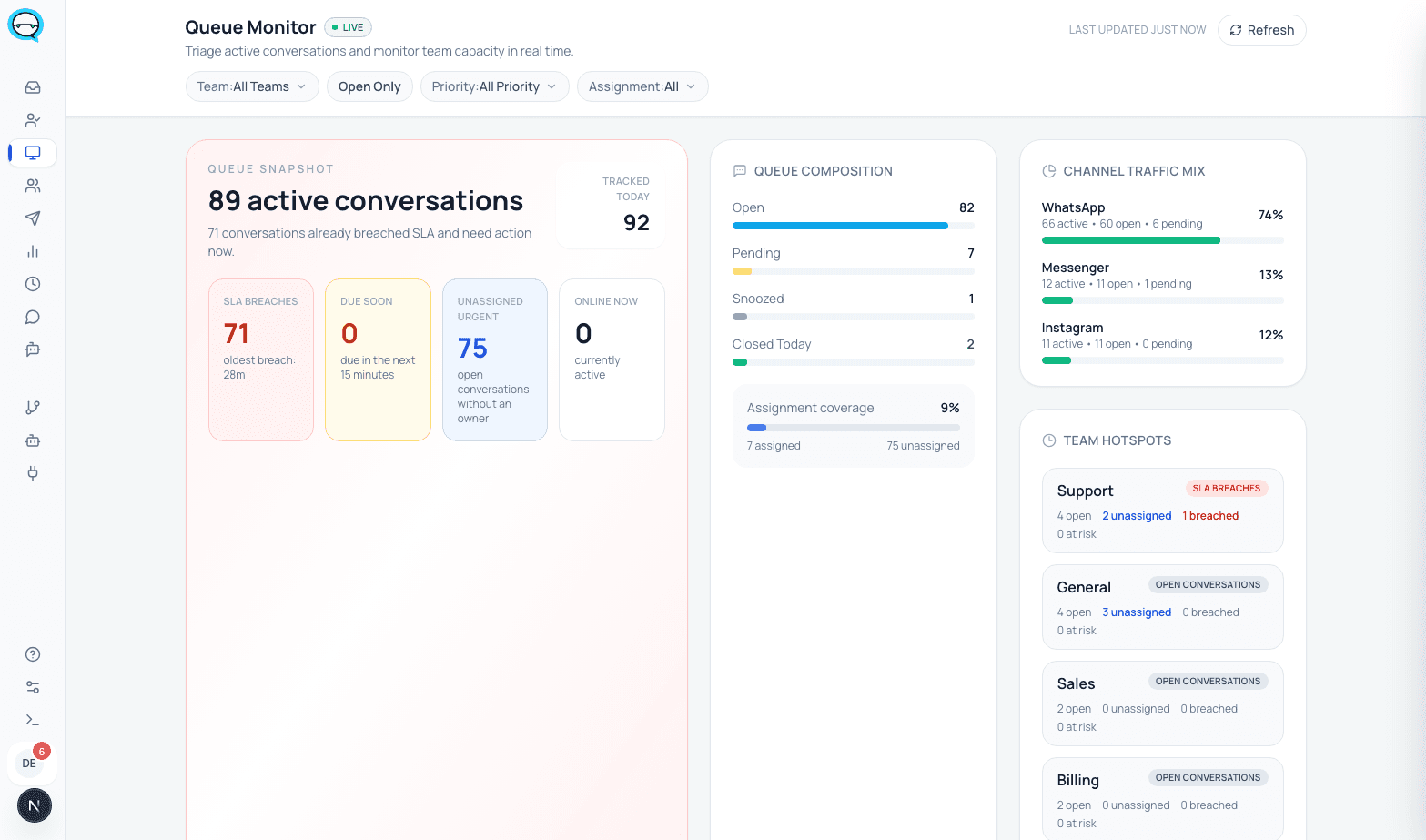
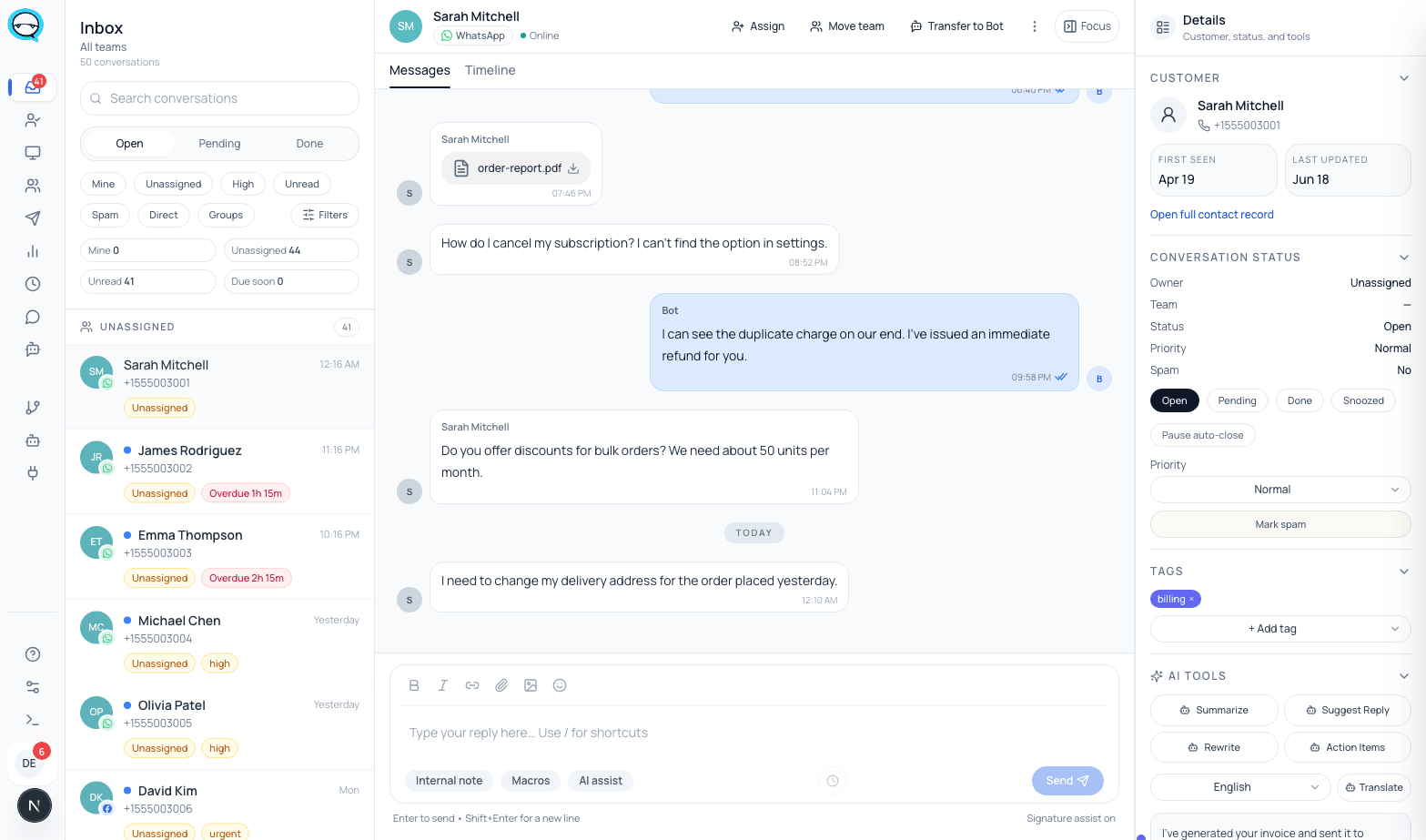
What This Looks Like In The Product
Real screenshots from the live marv.Inbox workspace. marv.Inbox is also available in Hebrew and Arabic.
Why teams search for this
What breaks in an unstructured support WhatsApp
Support operations that rely on informal WhatsApp management, group chats, personal phones, verbal handoffs, crack at volume. The cracks show up as repeated customer messages, missed escalations, and manager blind spots.
- ▲Customers send the same message twice because no one confirmed receipt or assigned the case.
- ▲Escalations to a specialist happen informally and the context of the original conversation is lost.
- ▲Managers cannot run QA or measure resolution time because there is no log.
Workflow
A structured support operation on WhatsApp
Inbound cases are triaged automatically or manually into queues by type, severity, or team.
Each case is owned by an agent who tracks it from open to closed with internal notes and status updates.
Closed cases are visible for QA; follow-up messages can be triggered automatically after resolution.
What the better setup should include
What a WhatsApp support workflow requires
One agent owns each case
The same agent carries it from open to close, not whoever is free at the moment.
Queue and escalations in view
The team lead sees queue depth, SLA breach risk, and open escalations without interrupting agents.
Quality you can measure
Routing, SLA alerts, escalation triggers, and auto-close rules are configured to run without manual oversight.
Best fit
Support teams that benefit most
- Teams handling more than 30 inbound WhatsApp conversations per day across multiple agents.
- Organizations where tier-1 agents triage and tier-2 specialists handle escalations on the same channel.
- Support managers who need SLA reporting, first-response time metrics, and resolution rate data from WhatsApp.
Questions teams ask before changing the workflow
How should a customer support team use WhatsApp?+
The healthiest model is a shared support workflow: inbound triage, clear ownership, internal collaboration, escalation to specialists, and visible SLA targets.
How many agents can work on one WhatsApp support queue?+
That depends on the software tier and operating model, but the important limit is not the app itself. It is whether assignment, follow-up, and escalation stay clear as more agents join the queue.
What should managers monitor in a WhatsApp support team?+
At minimum: open queue depth, time to first response, unassigned conversations, SLA risk, reassignment frequency, and which agents or teams are overloaded.
See whether this workflow fits your team
Explore the product, then request a walkthrough if you want help mapping channels, ownership, automation, or rollout.